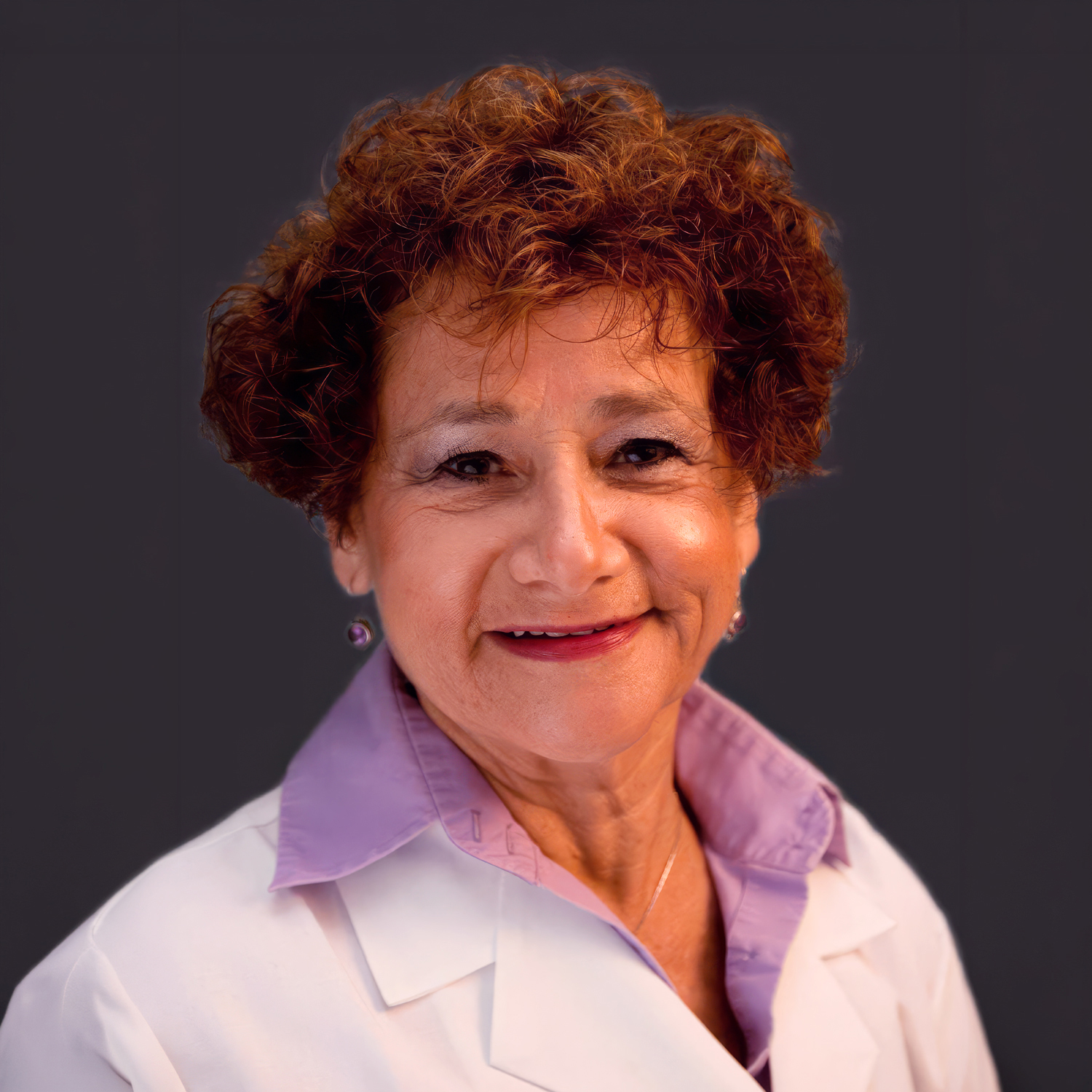
Sherry Bass

Sherry Bass, OD

Distinguished Teaching Professor
Languages: English, French, Spanish

Bio

BRIEF BIOGRAPHY FOR DR. SHERRY J. BASS, OD, FAAO, FCOVD Dipl. ABO Dr. Sherry J. Bass is a Distinguished Teaching Professor at the SUNY State College of Optometry where she has served on the faculty for 37 years and a Fellow of the American Academy of Optometry and College of Optometrists in Vision Development. She is also a Diplomate of the American Board of Optometry. She is an attending in the Retina Clinic of the University Eye Center where she is actively involved in clinical teaching and patient care. Dr. Bass currently serves as the Residency Supervisor for the Residency in Ocular Disease at SUNY, a position she has held since 1998. She is also a consultant for the Accreditation Council on Optometric Education (ACOE) and has chaired a number of accreditation visits for residency programs across the United States and is also a 40 year member of the American Optometric Association. Dr. Bass has authored over 150 publications, including several book chapters and has presented over 500 lectures at national and international meetings on diseases of the posterior segment, imaging technology and perimetry. She serves on the editorial board of Optometry and Vision Science, Optometric Office, the Review of Optometry and Optometry Times. In addition, Dr. Bass is actively involved in research in the genetics of hereditary retinal disorders and the use of imaging technology in understanding the pathophysiology of retinal disorders and has presented her work at the American Academy of Optometry continuing education and scientific meetings and at meetings of the Association for Research in Vision and Ophthalmology. She is a former Chair and member of the New York State Board for Optometry and continues to serve as a consultant for the Office of Professional Discipline for New York State. She is the recent recipient of the 2016 SUNY Alumna of the Year Award. In addition to her full-time responsibilities at SUNY, Dr. Bass maintains a part-time private practice in Woodmere, New York since 1981.

Education

  • OD, Doctor of Optometry, SUNY College of Optometry, 1980
  • OD, Optometry, SUNY State College of Optometry, 1980
  • , , , 1973
  • MS, Science Education, Queens College, 1973
  • MS, Science Education, Queens College, 1973
  • , , , 1972
  • BS, Science Education, Biology, SUNY at Albany, 1972

Affiliations

  • Diplomate - American Board of Optometry, 2014
  • Doctor of Optometry - Array, 1980
  • FCOVD - College of Optometrists in Vision Development, 1983

Awards/Honors

  • Alumna of the Year Award, 2016
  • Distinguished Teaching Professor, 2003
  • Irving S. Coleman Award for Excellence in Primary Care Optometry, 1980

Professional Experience

  • Distinguished Teaching Professor, Array, 2003 - Present

Clinical Interests

Retinal Disease
Retinal Imaging

Publications

  • A proposed mechanism influencing structural patterns in X-linked retinoschisis and stellate nonhereditary idiopathic foveomacular retinoschisis
  • Case Series: Multimodal Imaging Reveals the Spectrum of Pattern Dystrophies of the Retinal Pigment Epithelium
  • A Review of Mitochondrial Optic Neuropathies: From Inherited to Acquired Forms
  • Early Detection of Retinal Abnormalities with Spectral-Domain Optical Coherence Tomography and Ultra-Wide Field Autofluorescence
  • OCT in a Myelinated Retinal Nerve Fiber Syndrome with Reduced Vision
  • Visual Acuity Recovery in a Case of Idiopathic Retinal Vasculitis Aneurysms and Neuroretinitis
  • The Retinal Atlas
  • Bilateral Coats’ response in a female patient leads to diagnosis of facioscapulohumeral muscular dystrophy
  • Choroidal neovascularization in a young, healthy eye after LASIK.
  • Examination of the Posterior Segment
  • Array
  • Array
  • A Thr17Met Mutation Is Associated With an Unusual Retinochoroidopathy in an Autosomal Dominant Pedigree
  • Comparison of an automated confrontation testing device versus finger counting in the detection of field loss
  • AUTOSOMAL DOMINANT PERICENTRAL RETINOCHOROIDAL ATROPHY
  • Glaucoma without cupping
  • Optic disk evaluation and utility of high-tech devices in the assessment of glaucoma
  • RETINAL THICKNESS ANALYZER (RTA) PREDICTS RETINAL THINNING IN PERIPAPILLARY RETINOCHORIDAL ATROPHY.
  • SECONDARY RETINITIS PIGMENTOSA AS A COMPLICATION OF CROHNʼS DISEASE?
  • TWO FAMILIAL CASES OF ISOLATED FOVEAL HYPOPLASIA.
  • GLAUCOMATOUS PATIENTS WITH NON-GLAUCOMATOUS OPTIC NEUROPATHY.
  • Albinism
  • (OD-184)UNILATERAL MORNING GLORY SYNDROME WITH NORMAL VISUAL ACUITY
  • Choroidal nevus transformation to malignant melanoma
  • Neurological and Ocular Disease Masquerading as Amblyopia
  • AUTOMATED PERIMETRY IN DIAGNOSED AMBLYOPIA
  • CHOROIDAL NEVUS TRANSFORMATION TO MALIGNANT MELANOMA
  • Flash Visual Evoked Potential (VEP) in Amblyopia and Optic Nerve Disease
  • 10° FIELD TEST UNMASKS DEFECTS MISSED WITH THE 30° TEST
  • DIAGNOSIS OF HYSTERIA DISPROVEN WITH KINETIC FIXATION VISUAL FIELDS AND ELECTRORETINOGRAPHY
  • TWENTY-FIVE YEAR FOLLOW-UP OF AN ISOLATED ASTROCYTOMA OF THE OPTIC NERVE HEAD
  • Ectopia lentis, chorioretinal dystrophy and myopia
  • Visual evoked potential (VEP) delays in tilted and/or oblique entrance of the optic nerve head

Presentations

  • Differentiating Functional from Pathological Vision Loss , 2021
  • Retina Grand Rounds: Cases from the trenches, 2017
  • 11-year-old patient with retinitis pigmentosa mistaken for a malingerer: lessons learned, 2017
  • The Differential Diagnosis of Functional vs. Pathological Vision loss, 2012
Did You Find What You Need ?
Thank you for your feedback!
Up
Up